

Reading the back panel
Ingredients Guide: Reading Men's Supplement Labels
What each entry on a men's vitamin formulation really tells you — the form, the amount, and the one line that hides the most.
Why the back panel matters more than the front
This guide covers the ingredients you will see most often on men's vitamin supplements: what each one is, what form it usually takes, and what a typical daily amount looks like. It is written so you can open a bottle and understand the back panel without a second opinion.
The front of a bottle carries a category name. The back carries the facts: serving size, amount per serving, and ingredient form. Two products with the same front label can differ by a factor of four in what you actually swallow. Reading the back first takes thirty seconds and prevents most bad purchases — and it is the only way to tell apart two natural supplements for men that look identical on the shelf.
Four lines that decide everything
- Serving size — one capsule or three?
- Amount per serving, not per bottle
- The exact form the mineral takes
- Whether a blend hides the individual doses
The six entries you meet first
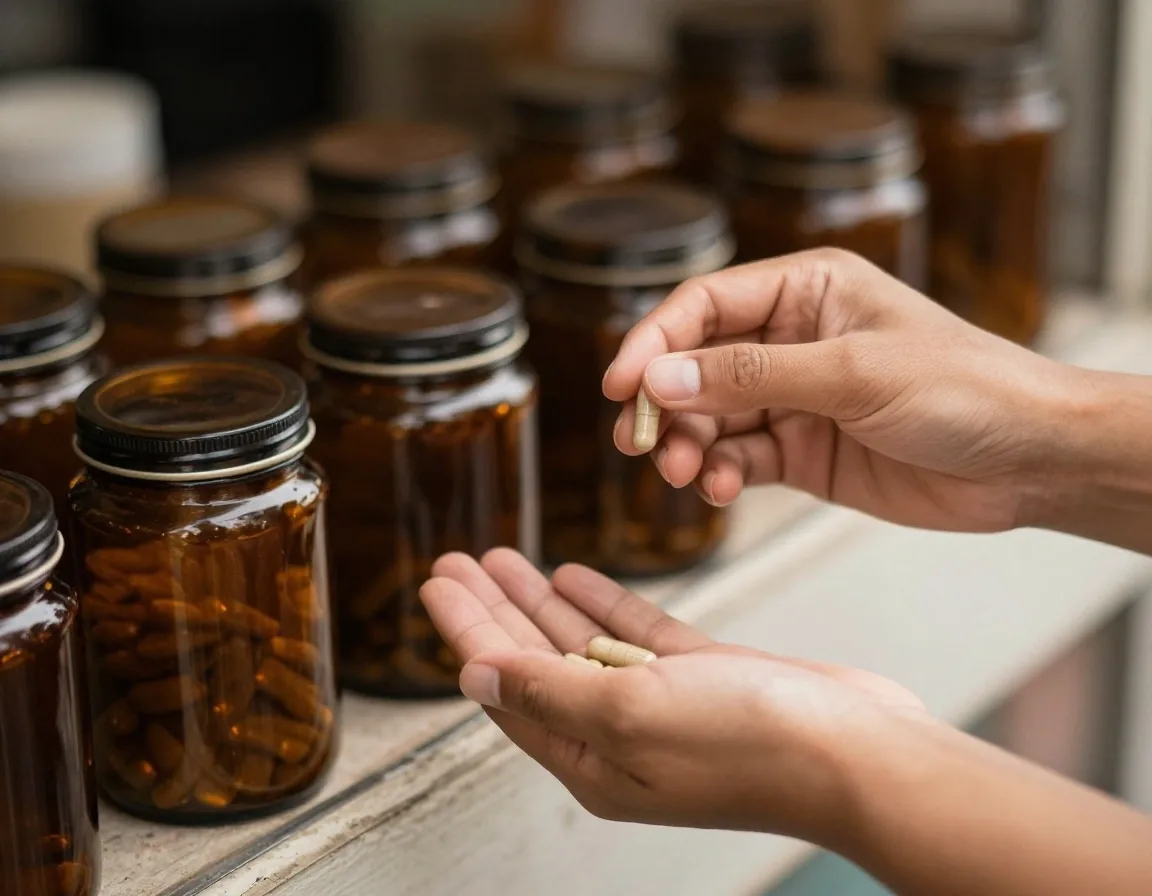
These six cover the great majority of what a men's vitamin and mineral formula contains. Each row below pairs the ingredient with the detail that actually changes what you buy.
Zinc
Magnesium
B-complex
Vitamin D
Ashwagandha, ginseng, fenugreek
Aminos and caffeine
Proprietary blends: what you can and cannot know
A proprietary blend lists its ingredients together under one total weight, with no individual amounts. You can see what is inside but not how much of each. That makes comparison between two bottles impossible and dosing uncertain.
Some blends are legitimate formulations with a reason behind the ratio. The problem is never the intent — it is that you cannot verify the dose, and neither can anyone reading the same panel. We flag blends in our own product entries rather than pretend the information is there.
A blend shows you
- Which ingredients are inside
- The combined total weight
- Whether they sit in one serving
A blend withholds
- How much of each ingredient
- How it compares to a dosed formula
- Whether the headline herb is 50 mg or 500 mg
The words printed at the bottom of the panel
Under the actives, every label carries a shorter list: the capsule shell, flow agents and sometimes a colourant. It rarely changes whether a product suits you, but it decides whether it fits how you eat — and it is the section most people skip.
Capsule shell
Gelatin or cellulose
Gelatin shells are animal-derived; cellulose shells are not. If you avoid certain sources for dietary reasons, this single word is the one that decides the purchase.
Flow agents
Magnesium stearate, silicon dioxide
Common in tiny amounts so powder flows into capsules cleanly. They appear near the end of the list because the quantity is small — a long other-ingredients line is not by itself a warning.
Colourants
Cosmetic, occasionally relevant
Some brands colour the shell for shelf appeal. It has no bearing on the actives above it, but a very long colour list on a short panel is a fair hint that the formula is not where the effort went.
A five-point label check
Run these five lines before you compare anything else. They catch the mistakes behind most returns and most disappointment.

-
Step 1
Read the serving size
One capsule, two capsules or a scoop. Everything else on the panel is measured against this number. -
Step 2
Read the amount per serving
Not per bottle, not per capsule, not per "daily dose". Per serving as the panel defines it. -
Step 3
Read the ingredient form
Citrate, glycinate, picolinate. The suffix is not decoration — it is the part that decides how the mineral behaves. -
Step 4
Check for hidden blends
If one total milligram figure covers four herbs, you cannot tell whether the headline ingredient is a real dose or a sprinkle. -
Step 5
Check servings per container
Thirty capsules at two per serving is a fifteen-day bottle, not a month. This line sets the real cost.
Caffeine adds up faster than people expect
Energy and endurance supplements put their caffeine number in milligrams, and that figure is the first thing to check after the serving size. The complication is botanical sources: green tea extract, guarana and yerba mate all contribute caffeine and are sometimes listed on a separate line from the caffeine entry itself.
A product can print 100 mg of caffeine and deliver meaningfully more once the botanicals are counted. If you drink coffee through the day, total everything before deciding on an afternoon serving — and if you are sensitive to stimulants, treat any energy formula as the one to read most carefully.
Before you dose
- Count the coffee you already drink
- Scan for green tea, guarana, yerba mate
- Move the serving earlier, not larger
Questions that come up while reading a panel
The label shows a mineral amount — is that the compound or the element?
Two bottles carry the same herb. Why do the amounts look so different?
Do I need every entry on the panel, or can I take fewer?
Where does this guide stop and someone else's advice begin?
Read one more label with us
If a specific ingredient on your bottle is not covered here, tell us what it is and we will explain what the entry means and what the amount tells you. If you would rather browse first, the product pages group formulas by what they are built around.
When to ask someone qualified
If you take prescription medicine, are managing a health condition, or are unsure how a supplement sits with what you already use, ask a pharmacist or your own qualified professional before adding it. That conversation is shorter and more useful when you bring the panel with you.
Everything on this page describes what labels say, not what any individual should take. Supplements sit alongside a healthy lifestyle; they are not a substitute for one, and no panel can tell you what suits your own situation.
SuplemenPria
Kuta, Kabupaten Badung, Bali 80361
+62 361 768 244
[email protected]
Monday to Friday, 9:00 AM – 6:00 PM